Demodex folliculorum and Demodex brevis are microscopic mites that live in human hair follicles and oil glands. When they overgrow, they’re closely linked to rosacea, blepharitis, and persistent facial redness — which is why so many dermatologists reach for ivermectin for Demodex mites first.
Ivermectin kills Demodex mites. As a prescription 1% cream (Soolantra), an over-the-counter 0.5% lotion, or an oral tablet, it works as both a miticide and an anti-inflammatory, and it’s FDA-approved for the inflammatory lesions of rosacea that Demodex overgrowth causes. Most people see visible improvement in 2–4 weeks, with full results by 3 months.
What Are Demodex Mites and How Do They Cause Skin Problems?
Demodex folliculorum and Demodex brevis are the two mite species responsible for human demodicosis, the medical term for Demodex overgrowth. Both are eight-legged arthropods that live inside hair follicles and sebaceous glands, primarily on the face, eyelids, and scalp. In small numbers they’re considered normal skin flora — most healthy adults carry some level of infestation without symptoms.
Problems start when the mite population climbs. Demodex folliculorum tends to cluster in hair follicles, while Demodex brevis burrows deeper into sebaceous and meibomian glands. Overgrowth is associated with itching, persistent redness, flaking, rough or bumpy texture, and inflammatory papules and pustules.
Clinically, Demodex overgrowth is most strongly tied to rosacea, Demodex blepharitis (eyelash mite infestation), and some cases of folliculitis and periorificial dermatitis. Density also rises with age: population studies report Demodex in as few as 17.7% of healthy adults but in 84–100% of people between 60 and 70 years old. Rosacea patients carry a disproportionately higher mite load — one meta-analysis found they were over nine times more likely to be Demodex-infested than people without rosacea (odds ratio 9.04).
Does Ivermectin Kill Demodex Mites?
Yes. Ivermectin kills Demodex mites by binding to glutamate-gated chloride channels in the mite’s nerve and muscle cells, causing paralysis and death. Human cells don’t share this channel type, and ivermectin doesn’t readily cross the blood-brain barrier in mammals, which is why the drug has a favorable safety profile at approved doses.
Beyond its direct miticidal effect, ivermectin has a second, independent action: it’s anti-inflammatory. A 2024 study found topical ivermectin changes the bacterial microbiome of rosacea-affected skin, suggesting it calms inflammation through pathways separate from mite reduction alone. That dual mechanism is part of why ivermectin can improve rosacea symptoms even in patients with low or undetectable Demodex counts.
The clinical evidence for the miticidal effect is substantial. A 2025 systematic review and meta-analysis pooling five controlled studies (n=180) found daily topical 1% ivermectin produced a mean reduction of 70.01 mites/cm² and an 80% drop in the share of patients above the clinically significant threshold of 5 mites/cm², typically after 16 weeks of use. In a separate real-world study, 32% of rosacea patients tested positive for Demodex at baseline, and all of them tested negative after 16 weeks of topical ivermectin (Trave & Roi, Dermatologic Therapy, 2019).
One thing to expect: as ivermectin kills off mites, some patients experience a temporary “die-off reaction” — a short-lived flare of redness or irritation as the body clears dead mite remnants — before symptoms improve.
What Types of Ivermectin Treat Demodex Mites?
Ivermectin for Demodex mites comes in three forms — a prescription topical cream, an over-the-counter topical lotion, and an oral tablet — and they aren’t interchangeable. Which one is right depends on where the mites are, how severe the infestation is, and whether previous treatments have worked.
Topical Ivermectin for Demodex (1% Cream / Soolantra)
Topical ivermectin 1% cream, sold as Soolantra, is the only ivermectin formulation FDA-approved specifically for Demodex-driven skin disease — the inflammatory lesions of papulopustular rosacea. Galderma Laboratories received FDA approval on December 19, 2014, after two randomized, double-blind, vehicle-controlled Phase 3 trials showed it significantly outperformed placebo.
In those pivotal trials, 38.4% and 40.1% of patients using ivermectin cream achieved “clear” or “almost clear” skin (Investigator’s Global Assessment success) after 12 weeks, compared with 11.6% and 18.8% of patients using the vehicle cream alone (Stein Gold et al., Journal of Drugs in Dermatology, 2014). A 2020 consensus statement from a 27-member international rosacea expert panel, published in the Journal of the American Academy of Dermatology, now recommends topical ivermectin as a first-line option for patients with mild to almost-clear inflammatory rosacea.
How to use it: apply a pea-size amount once daily to each affected area of the face — forehead, chin, nose, and each cheek — in a thin layer, avoiding the eyes, lips, and mouth. Most people see visible improvement within 2 to 4 weeks, with full results taking up to 3 months.
Ivermectin Lotion for Mites (0.5%)
A 0.5% ivermectin lotion, sold as Sklice, is available over the counter in the U.S. — but it’s FDA-approved for head lice, not Demodex mites. The FDA switched Sklice from prescription to nonprescription status in 2020, and its labeled use remains scalp and dry-hair application for lice, not facial application for Demodex.
Its use against Demodex is off-label. In eye care, a small case series found that two in-office applications of 0.5% ivermectin lotion, spaced two weeks apart, reduced the eyelash “collarettes” characteristic of Demodex blepharitis. This is a clinician-administered, off-label use — not a substitute for a dermatologist-directed Soolantra prescription for facial Demodex or rosacea.
Oral Ivermectin for Demodex (Tablets)
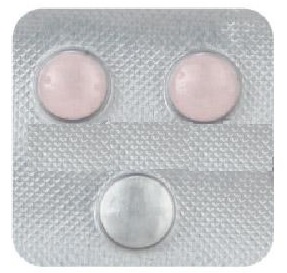
Oral ivermectin tablets are reserved for more severe, widespread, or treatment-resistant Demodex infestations that haven’t responded to topical treatment, and they require a prescription and physician supervision. Reported protocols mirror the scabies dosing model: two oral doses of 200–250 mcg/kg taken one week apart, or weekly dosing of roughly 200 mcg/kg continued until clear clinical improvement.
There’s an important caveat: no large-scale randomized trial has established a single standardized dosing protocol for oral ivermectin in demodicosis, so treatment plans are individualized by the prescribing physician rather than self-directed.
Does Ivermectin Treat Demodex-Related Rosacea?
Ivermectin is FDA-approved specifically for papulopustular rosacea (PPR), the rosacea subtype marked by inflammatory bumps and pustules that Demodex overgrowth commonly aggravates. Because Demodex density is measurably higher in rosacea-affected skin than in unaffected skin, treating the mite population is now considered a core strategy for this subtype.
Ivermectin isn’t the only topical option — metronidazole is a longstanding alternative — and head-to-head data show the two perform comparably on visible redness. A rater-blinded, randomized split-face trial in patients with low-density Demodex rosacea found topical metronidazole and ivermectin produced similar improvement in persistent erythema, but ivermectin performed better on patient-reported symptoms like warmth, itchiness, and skin roughness.
A key clinical nuance: ivermectin improves rosacea symptoms even in patients with low or zero detectable Demodex mites, supporting the idea that its anti-inflammatory, microbiome-modulating effect works independently of mite count.
Where Else Is Ivermectin Used for Facial and Skin Mites?
Demodex overgrowth isn’t limited to the cheeks and nose. Ivermectin for facial mites and skin mites is also used, typically off-label, for two other common presentations.
Demodex blepharitis (eyelash mite infestation) causes crusty debris — cylindrical, dandruff-like collarettes — at the base of the eyelashes, along with itching and redness of the lid margin. Dermatologists and ophthalmologists have used topical ivermectin 1% cream applied nightly to the lash margins for 6 to 8 weeks, or in-office 0.5% lotion applications, to clear it.
Demodex on the scalp and ears can also overgrow, contributing to itching, folliculitis, and flaking in those areas, and the same topical ivermectin formulations are sometimes used off-label there as well, always under a clinician’s guidance.
How Long Does Ivermectin Take to Work on Demodex Mites?
Ivermectin starts killing Demodex mites within days, but visible skin improvement takes longer — typically 2 to 4 weeks for early results and 6 to 8 weeks up to 3 months for the full effect. The lag exists because dead mite remnants continue to provoke a mild inflammatory response until the body clears them, a process that itself takes weeks.
Two variables shift that timeline. First, baseline mite density matters — patients with a heavier Demodex load before treatment generally need a longer course to see the same improvement as patients with a lighter load. Second, in the meta-analysis discussed above, mite-density reductions were sustained for up to 12 weeks after a 16-week treatment course ended, suggesting benefits don’t disappear the moment treatment stops.
Practical takeaway: don’t judge topical ivermectin a failure before 4 weeks of consistent daily use, and give it a full 8 to 12 weeks before a complete reassessment with a dermatologist.
Ivermectin for Demodicosis: What the Clinical Evidence Shows
The strongest clinical evidence for ivermectin in demodicosis comes from a 2025 systematic review and meta-analysis that pooled five controlled studies covering 180 participants. It found daily topical 1% ivermectin produced a mean reduction of 70.01 mites/cm² and cut the proportion of Demodex-positive patients (above the 5 mites/cm² clinical threshold) by 80%, typically over a 16-week treatment course, with only mild, localized adverse events and no systemic side effects reported across the pooled studies.
The review’s authors flagged real limitations, too: the studies were heterogeneous in design and dosing, the total sample size was modest, and mite repopulation after stopping treatment is a documented risk — meaning ongoing monitoring, not a single course, is often what keeps demodicosis controlled long-term.
How Does Ivermectin Compare to Other Demodex Mite Treatments?
Ivermectin isn’t the only agent that kills Demodex mites, and it isn’t always the most potent one in a test tube. In a 2023 in vitro comparison, tea tree oil (specifically its active compound terpinen-4-ol) showed the strongest direct killing effect on Demodex folliculorum, followed by ivermectin 1%, then metronidazole 0.75%.
| Treatment | Primary mechanism | Best established use | Prescription status |
| Ivermectin 1% cream | Miticidal + anti-inflammatory | Papulopustular rosacea (FDA-approved) | Prescription |
| Metronidazole 0.75%–1% | Anti-inflammatory; direct mite effect debated | Rosacea; comparable erythema results to ivermectin | Prescription |
| Tea tree oil (terpinen-4-ol) | Direct acaricidal, antimicrobial | Adjunct/alternative for demodicosis; strongest in vitro killing | OTC |
| Permethrin | Neurotoxic to mites (scabies/lice origin) | Second-line for resistant demodicosis | Prescription |
For a rosacea patient with a confirmed inflammatory component, dermatologists most often reach for ivermectin first — it’s the only one of the four with FDA approval specifically for rosacea’s inflammatory lesions, it’s dosed once daily, and it’s generally well tolerated. Tea tree oil and metronidazole remain reasonable alternatives or adjuncts, particularly when ivermectin isn’t tolerated or available.
What Are the Side Effects of Ivermectin for Demodex Treatment?
Ivermectin is generally well tolerated in both topical and oral forms, and serious side effects are rare. That said, the two forms carry different safety profiles worth knowing before starting treatment.
Topical ivermectin’s most common side effects are local: mild skin burning, irritation, dryness, or a stinging sensation at the application site. It should never be applied inside the eyes, mouth, or vagina.
Oral ivermectin is also considered safe at approved demodicosis dosing, with side effects reported in fewer than 4% of patients. When they occur, they’re typically mild and include fatigue, abdominal pain, loss of appetite, constipation, diarrhea, nausea or vomiting, dizziness, drowsiness, tremor, itching, or hives.
Who should be cautious: pregnant or breastfeeding patients, anyone on medications that interact with ivermectin, and anyone with a compromised immune system should discuss oral ivermectin specifically with a physician before starting — this form isn’t appropriate for self-directed, unsupervised use.
Is Ivermectin Cream for Demodex Available Over the Counter?
It depends on which product: 1% ivermectin cream (Soolantra) is prescription-only, 0.5% ivermectin lotion (Sklice) is available over the counter but is FDA-approved for head lice rather than Demodex, and oral ivermectin tablets are prescription-only. There is currently no ivermectin product sold over the counter with an FDA-approved indication for Demodex mites or rosacea.
To get a prescription for Soolantra, most patients see a dermatologist in person or through a telehealth dermatology visit; many telehealth platforms can prescribe it after a photo-based or video consultation. Cost varies by insurance coverage and pharmacy, and manufacturer savings programs can reduce the out-of-pocket price for the brand-name cream.
How to Use Ivermectin for Demodex Mites Safely
Cleanse the face and let it dry completely, then apply a pea-size amount of ivermectin cream in a thin layer to each affected area — forehead, chin, nose, and both cheeks — once daily, avoiding the eyes, eyelids, lips, and inside the nostrils. Wash your hands immediately after application, and let the cream fully absorb before applying makeup or sunscreen.
A few do’s and don’ts: don’t layer other active acne or rosacea treatments on top of ivermectin without a dermatologist’s guidance, since combining actives can increase irritation without adding benefit. Don’t stop treatment the moment redness improves — Demodex mite counts can take longer to normalize than surface symptoms, and stopping early raises the risk of relapse. If your skin is sensitive, consider a patch test on a small area first.
See a dermatologist if: there’s no improvement after 8 to 12 weeks of consistent use, symptoms are getting worse rather than better, or the presentation doesn’t look like typical rosacea or demodicosis — a mite infestation is sometimes mistaken for other skin conditions that need a different treatment entirely.
Frequently Asked Questions
Yes. Ivermectin binds to glutamate-gated chloride channels in the mite’s nerve and muscle cells, causing paralysis and death. Clinical studies show it also reduces skin inflammation independently of mite count, which is why it’s FDA-approved for rosacea’s inflammatory lesions.
Most people see visible improvement within 2 to 4 weeks of daily topical use, with full results — including resolved redness from mite die-off — taking 6 to 8 weeks up to 3 months. Heavier baseline mite counts typically need a longer course.
Yes. Soolantra is the brand name for prescription ivermectin 1% cream, FDA-approved for the inflammatory lesions of rosacea. Generic ivermectin 1% cream, where available, contains the same active ingredient and concentration.
Oral ivermectin is used for more severe or treatment-resistant demodicosis, but only under a physician’s supervision — it isn’t self-prescribed. Reported protocols use 200–250 mcg/kg doses given weekly or one week apart, similar to the scabies treatment model.
For facial Demodex tied to rosacea, topical 1% ivermectin cream (Soolantra) is the first-line, FDA-approved option. Oral ivermectin is reserved for widespread or treatment-resistant cases that haven’t responded to topical treatment.
No. The 1% cream (Soolantra) is prescription-only. A 0.5% ivermectin lotion (Sklice) is available over the counter, but it’s FDA-approved for head lice, not Demodex, so its use for mites is off-label.
Topical ivermectin’s most common side effects are mild local irritation, burning, or dryness at the application site. Oral ivermectin causes side effects in fewer than 4% of patients, typically mild fatigue, gastrointestinal upset, dizziness, or itching.
Yes. Ivermectin is FDA-approved specifically for papulopustular rosacea, and Phase 3 trials showed 38–40% of patients achieved clear or almost-clear skin after 12 weeks, compared with 12–19% on vehicle cream alone.
Once daily. Apply a pea-size amount in a thin layer to each affected facial area, avoiding the eyes, lips, and mouth, and let it dry before applying makeup or sunscreen.
If there’s no improvement after 8 to 12 weeks, a dermatologist may consider oral ivermectin, combination therapy with metronidazole, or an alternative agent such as tea tree oil, since resistant or misdiagnosed cases sometimes need a different approach entirely.
Medical disclaimer: This article is for informational purposes only and is not a substitute for professional medical advice, diagnosis, or treatment. Always consult a board-certified dermatologist before starting, stopping, or changing any Demodex or rosacea treatment, especially prescription-strength or oral ivermectin.